





When an opener fails, most homeowners just want the door working again. It is worth pausing first, because the type of opener you choose affects noise, maintenance, and how the garage feels to use for the next decade. There are three main drive types, and each suits a different situation.
Chain Drive
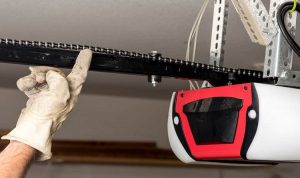
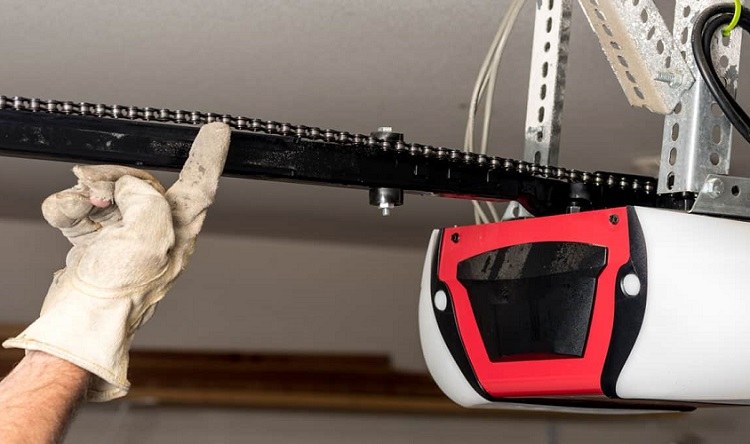
A chain drive uses a metal chain to move the door, much like a bicycle chain. It is strong, proven, and generally the most affordable option, which makes it a sensible choice for heavy doors and for detached garages. The tradeoff is noise. A chain drive rattles, and you will hear it through the wall of any room above or beside the garage.
Belt Drive
A belt drive swaps the chain for a reinforced rubber belt. It runs noticeably quieter and with less vibration, which is why it is usually the recommendation for attached garages, especially when a bedroom or living space sits nearby. Belt drives cost more up front and need little maintenance in return. For most attached garages, the quieter operation is worth the difference.
Jackshaft
A jackshaft opener mounts on the wall beside the door rather than on the ceiling. That frees up overhead space, which matters for garages with high ceilings, low headroom, storage racks, or a car lift. Jackshafts are typically the most expensive of the three and are the specialty option rather than the default, but for an awkward garage they can be the only clean solution.
Features Worth Considering
- Smartphone control, so you can check whether the door is closed and open it remotely.
- Battery backup, which keeps the door working during a power outage.
- A built-in camera or motion-activated lighting for security.
- Rolling code technology, which changes the access code after each use.
- Compatibility with your existing keypad and remotes.
Matching the Opener to the Door
Horsepower matters as much as drive type. A heavier door, such as a solid wood or insulated double door, needs more power than a lightweight single door, and an underpowered opener strains and wears out early. Worth remembering: the opener does not lift the door. The springs carry the weight. If the door feels heavy or moves unevenly, the springs need attention first, or the new opener will fail early too.
Installation and Safety
Any opener installed today should include photo-eye sensors and an automatic reversal feature, and both should be tested after installation. Professional installation also covers travel limits, force settings, and proper mounting, which is where most performance problems begin. In Fresno, A Plus Garage Doors installs and repairs all three opener types and is locally owned and family-operated.
Final Thoughts
Choose a chain drive for a detached garage on a budget, a belt drive for anything attached to living space, and a jackshaft when ceiling space is limited. Then match the horsepower to the door and make sure the springs are in good shape.